What Does Spain’s PISA Performance Mean for Your Child?

If you are a parent choosing a school in Madrid, you may have seen the latest headlines about Spain’s PISA results. The 2025 results show that Spanish 15-year-olds scored below the OECD average in mathematics, reading, and science. Results have also declined since 2015, with the proportion of low-performing students increasing across all three subjects.
But what does that actually mean for your child? PISA measures education systems, not individual schools, and it only assesses 15-year-olds. A national average cannot tell you whether your child is being challenged, supported when they struggle, or making meaningful progress. Those are the questions parents should be asking about their child’s school.
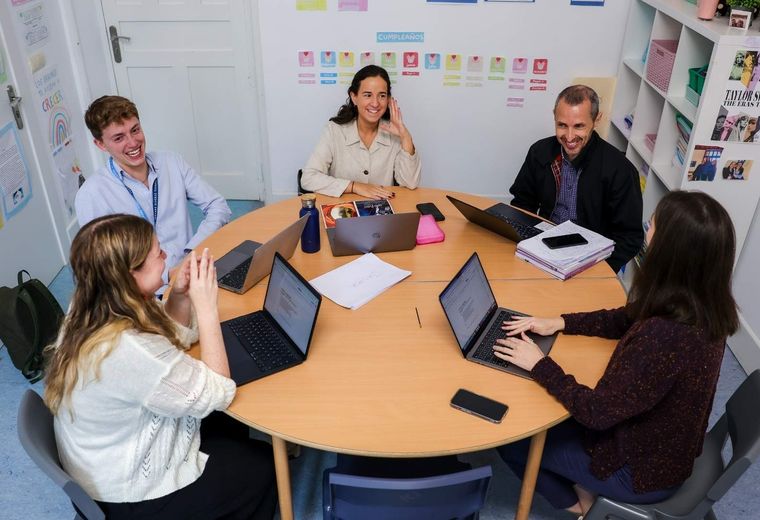
At Brewster Madrid, understanding where each student is and helping them move forward is central to our approach to individualized learning. With an average 1:15 teacher to student ratio, teachers can know their students well and use assessment data to understand where they are academically and what they need next.
We see this clearly in our Lower School math data. Our assessments begin in grade 1 and are based on numeracy standards taken from US Common Core Math Standards as well as other international best practices. At the beginning of last year, 48% of students (grades 1-5) started the year below grade level expectations. Over the course of the year, our students not only closed this achievement gap but also surpassed average expected growth per grade level.
As we begin our 2026-27 school year, we have more wins to celebrate. In grade 1 where we focus on foundational math skills, we can see that 85% of students are at or above expected grade level in addition and subtraction (number operations). In grades 2-5, 83% of students are at or above expected grade level range across 5 math domains. These results are a clear reflection of the progress students can make when teachers understand their starting point and have the opportunity to respond to their individual needs.
Individualized learning is not just about what happens during a math lesson. At Brewster, students also have opportunities to apply their learning beyond the classroom. Last school year, students took part in more than 130 Learning Expeditions, connecting curriculum to real experiences across Madrid and beyond. These hands-on experiences encourage students to ask questions, solve problems, and make meaningful connections between what they learn and the world around them.
PISA is useful because it gives us a picture of how education systems are performing. But it should not be the only thing parents consider when choosing a school. Look at how your child is progressing. Look at how well teachers know them. Look at the support available when they need it and the opportunities available when they are ready for more.
Your child is not a PISA score. They are an individual with their own strengths, interests, challenges, and ambitions. Their education should help them make progress, give them the right level of challenge and support, and give them opportunities to discover what they are capable of.
That is what individualized learning looks like at Brewster Madrid. If you are interested in learning more about our approach, click the link to book a campus tour and see it for yourself.